



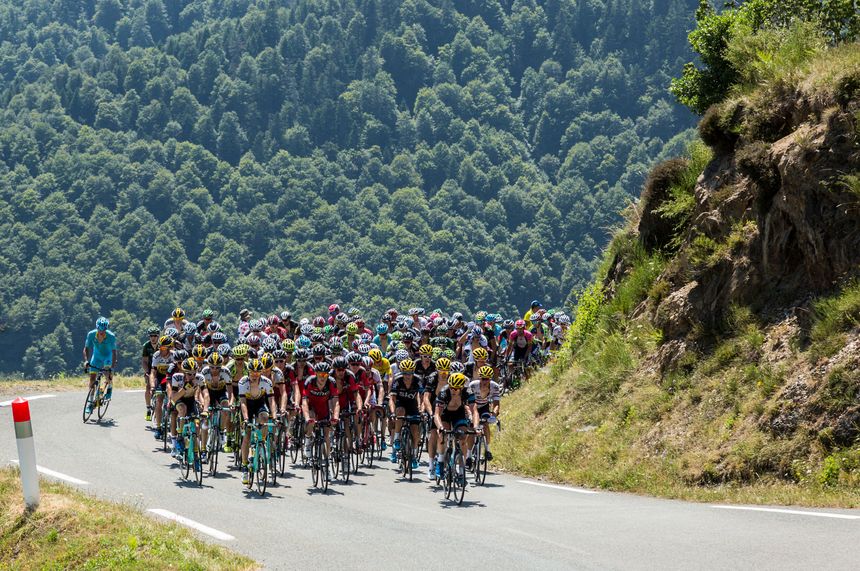

The 2026 Tour de France has been overshadowed by controversy after a series of unusual overnight anti doping tests and a subsequent crash that forced contender Jonas Vingegaard out of the race with a broken collarbone. The race has been transformed from another chapter in cycling's greatest modern rivalry into a debate about how the sport balances rigorous anti doping measures with athlete welfare.
The controversy began before Stage 15 on Sunday 19 July when race favourite Tadej Pogačar and two time Tour winner Jonas Vingegaard were subjected to anti doping tests during the night. According to reports, Vingegaard was awoken at 2am by officials from the International Testing Agency (ITA), while Pogačar was tested at around 5am. These tests took place outside the normal testing window and required special judicial authorisation under French law.
Hours later, disaster struck. While descending during the stage to Plateau de Solaison, Vingegaard crashed heavily and suffered a broken collarbone, forcing him to abandon the Tour for the first time in his career. At the time of the accident he was sitting second in the general classification and was the closest challenger to Pogačar.
The timing of the crash fuelled speculation. Pogačar suggested that disrupted sleep may have affected his rival's concentration, noting that recovery and rest are critical during a three week race. Belgian Olympic champion Remco Evenepoel was even more outspoken, describing the overnight testing regime as "inhuman" and "disrespectful". Several riders argued that waking competitors in the middle of the night during the world's most demanding cycling race was detrimental to both performance and safety.
Vingegaard himself adopted a more measured position. While acknowledging that the 2am test "clearly did not help", he stopped short of blaming it for the crash. He accepted that crashes are an inherent risk of professional cycling and said he could not say with certainty whether the loss of sleep played a role.
The anti doping authorities have defended their actions. The ITA stated that although night time testing can be disruptive, it is sometimes necessary to ensure the effectiveness of anti doping programmes and maintain the integrity of competition. The agency stressed that such testing is conducted under strict legal safeguards and with consideration for riders' welfare.
What has made the situation particularly contentious is the wording of cycling's anti doping regulations. Under UCI rules, testing between 11pm and 6am is generally prohibited unless a rider has agreed to it or there is a "serious and specific suspicion" of doping. Yet reports later emerged suggesting that several other teams were also subjected to testing outside normal hours, creating confusion about the rationale behind the operation and whether specific suspicions existed. Importantly, there is currently no suggestion that either Pogačar or Vingegaard failed any test or has previously returned adverse findings.
Cycling's history explains why anti doping controls remain so aggressive. Few sports have suffered more reputational damage from performance enhancing drugs, and organisers are determined not to repeat the mistakes of previous eras. Nevertheless, the Vingegaard incident raises a legitimate question: can the fight against doping be conducted without compromising rider recovery and safety?
The debate is unlikely to disappear once the Tour finishes in Paris. While no definitive link can be established between Vingegaard's disrupted sleep and his crash, the image of one of cycling's biggest stars being woken at 2am before suffering a race ending injury has resonated throughout the peloton and the public. The challenge for cycling's governing bodies will be finding a balance between protecting the credibility of the sport and protecting the wellbeing of its competitors.
/Passle/57b2e0b63d947408fcc6e4e6/SearchServiceImages/2026-09-29-17-28-49-477-6abbf551460fb9469a25c935.jpg)
/Passle/57b2e0b63d947408fcc6e4e6/SearchServiceImages/2026-05-22-10-21-54-069-6a102e421a1fd2238dccf706.jpg)
/Passle/57b2e0b63d947408fcc6e4e6/SearchServiceImages/2025-10-21-10-59-00-260-68f76774e76526bbfaa5afe3.jpg)